In the manufacturing industry, efficiency, precision, and scalability are non-negotiable. Investing in a robust ERP for manufacturing can revolutionize operations, streamline workflows, and enhance productivity. Two leading players in the manufacturing ERP market are NetSuite and Microsoft Dynamics 365. This blog explores their key features, pricing, pros, and cons to help you decide which ERP system best suits your manufacturing needs.
NetSuite is a cloud-based ERP system for manufacturing companies, offering a unified
platform for managing finance, inventory, production, and customer relations. Known for
its scalability, it’s ideal for mid-sized to large enterprises aiming to streamline
complex workflows.
Dynamics 365 is a comprehensive suite combining ERP and CRM functionalities. It’s tailored for manufacturers seeking to enhance operations with seamless integrations, advanced analytics, and AI-driven insights.
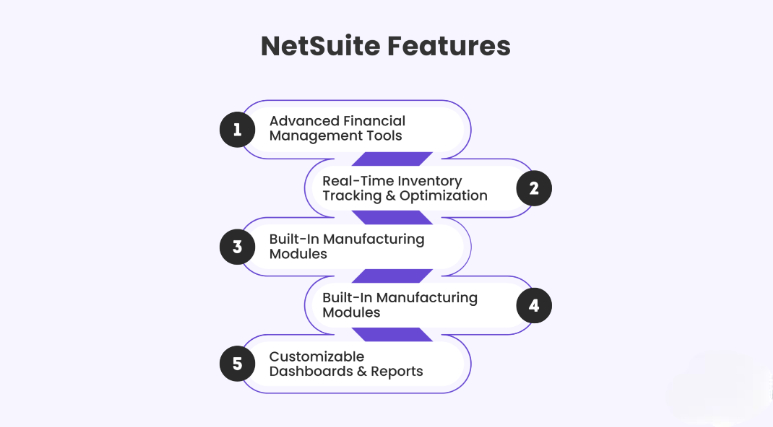
Advanced Financial Management Tools: NetSuite offers robust tools for handling finances, including budgeting, expense tracking, and financial reporting, ensuring precise management of resources.
Gain complete visibility into inventory levels and movements, helping reduce stockouts and overstocking while improving overall supply chain efficiency.
Features like production scheduling and Bills of Materials (BOM) management streamline manufacturing operations, ensuring seamless workflows.
NetSuite supports compliance with international regulations, making it ideal for businesses operating in multiple regions.
Tailor dashboards and analytics to suit specific business needs, enabling informed decision-making and real-time performance tracking.
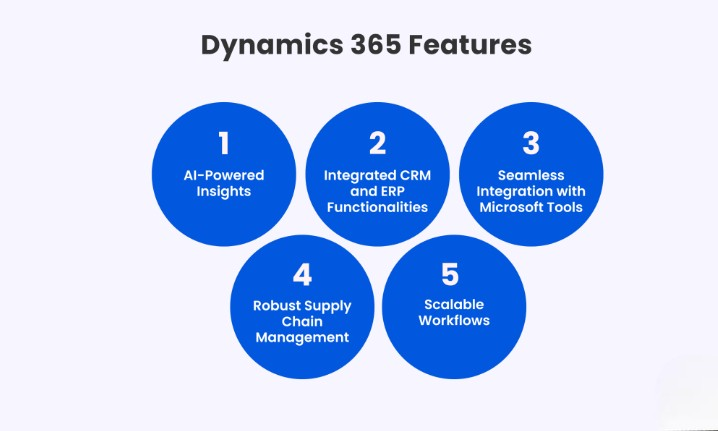
Leverage artificial intelligence for predictive maintenance, demand forecasting, and improved operational efficiency, reducing downtime and costs.
Dynamics 365 combines CRM and ERP tools to provide a unified platform for managing customer relationships and business processes.
Benefit from out-of-the-box integration with Microsoft tools like Office 365, Teams, and Azure for enhanced collaboration and productivity.
Efficiently manage your supply chain with advanced tools for inventory tracking, logistics planning, and supplier coordination.
Designed to grow with your business, Dynamics 365 provides flexible workflows that adapt to increasing operational demands.
NetSuite offers subscription-based pricing starting from $999/month with an additional $99 per user. Implementation costs vary based on customization needs.
Dynamics 365 pricing starts at $65/user/month for basic plans and scales up depending on features. Implementation costs depend on integration requirements and company size.
Dynamics 365 pricing starts at $65/user/month for basic plans and scales up depending on features. Implementation costs depend on integration requirements and company size.
Known for quicker implementation but may require significant customization for niche manufacturing needs
Offers robust integrations but has a steeper learning curve due to its extensive features.
Selecting the best ERP for manufacturing depends on your business’s size, budget, and specific needs. If scalability and global compliance are priorities, NetSuite is a solid choice. For manufacturers deeply integrated with Microsoft tools or seeking AI-powered analytics, Dynamics 365 stands out. Evaluate your long-term goals, operational complexity, and existing tech ecosystem to make an informed decision.
Both NetSuite and Dynamics 365 are top contenders in the manufacturing ERP software market. While NetSuite excels in scalability and manufacturing-specific features, Dynamics 365 shines with its integration capabilities and AI-driven insights. Assess your business’s unique needs to choose the ERP system that aligns with your goals.
Achieve new heights with solutions tailored to your goals in AI, ERP, CRM, Business Consultancy, and Marketing. Whether you’re focused on efficiency or reaching a broader audience, our team is ready to make it happen.
Looking for a custom ERP waste management software development for your recycling industry? Get ERP Fast Track - ...

Get ERP Fast Track : Best ERP pharma software solution for your pharmaceutical industry, medical, and healthcare business...

Opt for ERP Fast Track : top ERP software for manufacturing industry, to empower small business types to large-scale production companies today...

Healthcare industries all over the world are centric on patients and their proper treatment and care. The implementation...
Looking for the best ERP waste management solution? Explore cloud-based, open-source, and customized ERP Fast Track ...

Are you fed up with manual processes & looking for the best manufacturing ERP software to automate your production? Get ERP Fast Track ۔۔.

Looking for the best ERP for educational institutions? Get ERP Fast Track : an open-source cloud-based ERP system for ۔۔۔

Get ERP Fast Track : the best education ERP software & academic learning management system for your school, college,...

Explore Infonet’s ERP Fast Track - an open-source cloud ERP waste management software solution for recycling industries۔۔.

The right choice of Pharmaceutical ERP Software plays an important role in streamlining operations, ensuring ۔۔۔

Pharmaceutical ERP software is specialized and enables optimizing the pharma enterprise's operation. Its sports ,...

ERP for Pharma helps pharmaceutical groups streamline operations, make sure compliance, and pressure increas۔۔.

Implementing ERP for pharmaceuticals can streamline operations, improve compliance, and optimize resource ۔۔۔
In the fast-paced world of manufacturing, managing production schedules, inventory, and financials can be...
Manufacturing ERP systems play a critical role in the digital transformation of the manufacturing industry. These system۔۔.
In the manufacturing industry, efficiency, precision, and scalability are non-negotiable. Investing in a robust۔۔۔
In the dynamic manufacturing world, ERP Fast Track : the best manufacturing ERP software, has come up as ...

Healthcare industries all over the world are centric on patients and their proper treatment and care. The۔۔.